Getting a Crown: What the Procedure Is Like
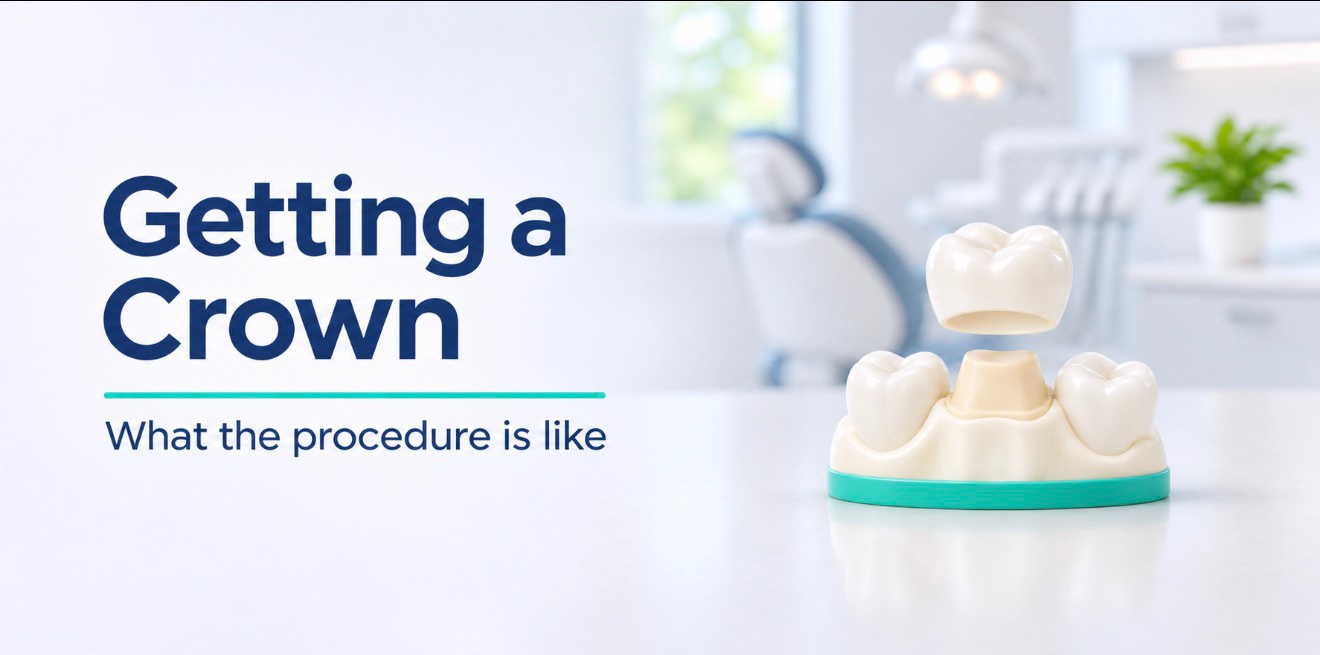
If we have recommended a crown, you may be wondering what the appointments actually involve. At our office, a lab-made crown usually takes two visits. At the first, we prepare the tooth, take a digital scan and place a temporary crown. At the second, we check and cement the finished crown.
The visits are usually two to three weeks apart. Here’s what to expect at each one and how to care for your tooth in between.
Why a tooth might need a crown
A crown covers and protects a tooth while restoring its shape and function. We may recommend one when a tooth is cracked, has a large filling with thin walls around it, or has lost enough structure that a filling alone may not hold up well.
The right treatment depends on the tooth. If we recommend a crown, we’ll show you what we’re seeing and talk through the reasons for it.
The first visit: preparing the tooth
Plan on about an hour to an hour and a half.
Getting numb. We numb the tooth and surrounding area, then give the anesthetic time to work. We check that you’re comfortable before we start. If you’ve had trouble getting numb in the past, let us know. Our guide to getting numb explains more about what to expect.
Preparing the tooth. We remove decay and any failing filling material. If the tooth needs more support, we may build up the center with filling material. We then shape the tooth to make room for the crown. How much shaping is needed depends on the tooth and the restoration planned.
Taking a digital scan. We use a small camera wand to scan the prepared tooth, the neighboring teeth and your bite. The scan goes to our dental lab, where the crown is made. If we need a different kind of impression for your situation, we’ll explain that before we take it.
Placing a temporary crown. Before you leave, we place a temporary crown with temporary cement. It protects the prepared tooth and helps keep the space while the lab makes your final crown. The temporary is not as strong as the final crown and can come loose, so it needs a little extra care.
Caring for your temporary
Wait until the numbness wears off before eating so you don’t accidentally bite your cheek, lip or tongue. While the temporary is in place:
- Chew on the other side when you can. Avoid hard and sticky foods on the temporary, including caramel, gum and taffy.
- Brush as usual. When you floss beside the temporary, slide the floss out to the side instead of pulling it up, which can lift the crown.
- Mild sensitivity and some gum soreness can happen around the temporary. Let us know if symptoms are worsening or you’re concerned.
If the temporary comes off, call us. If it happens after hours and the tooth is not painful, our after-visit instructions explain how to use a small amount of temporary dental cement or denture adhesive until we can see you. Put it back only if it slides on easily. Don’t force it or use household glue.
The second visit: fitting your crown
Plan on about 30 to 45 minutes. Many patients don’t need to be numbed for this appointment, though we can discuss it if the tooth is sensitive.
We remove the temporary and clean the tooth, then try in the finished crown before cementing it. We check the fit, the contact with neighboring teeth and the shade. We also check your bite and make any needed adjustments. Once the crown is ready, we cement it and remove the excess cement.
If you wear a nightguard, retainer or partial denture, bring it with you so we can check its fit with the new crown.
After the crown is in
If you were numbed, wait until the numbness wears off before eating. Avoid very hard or sticky foods on the new crown for the first 24 hours, or follow any different instructions we give you for your particular crown.
Some sensitivity to temperature or pressure can occur for a few days and sometimes longer. It should gradually improve. Brush and floss around the crown every day. The tooth underneath still needs care, especially where the edge of the crown meets the gumline.
Call us if your bite feels high or uneven, your crown feels loose, or you have sharp pain when biting. Also call if your symptoms get worse rather than better, or if pain or sensitivity isn’t controlled with over-the-counter medication.
How long does a crown last?
A crown can serve you well for many years, but we can’t promise a particular lifespan. The condition of the tooth underneath, the crown’s materials, your bite, clenching or grinding, and daily care all play a part. We check your crown at regular visits so we can identify changes and talk about what, if anything, needs attention.
Some patients also wonder whether a crowned tooth will need a root canal. We talk through that question in I’m Getting a Crown, Will I Need a Root Canal Too?
My takeaway as a dentist
A crown appointment is a series of careful steps: prepare the tooth, scan it, protect it with a temporary, and check the fit of the final crown. You should know why a crown is being recommended and what to expect before we begin.
If you have questions about a tooth we’ve recommended treating, call us at (970) 237-4313. We’re happy to walk through the plan with you.